Showing posts with label surveillance. Show all posts

Monday, April 21, 2014

Snowden Has a Sad Over Putin Question

 photo 50950c4e-8b5c-40e8-94d2-2ea907c8e3fa.jpg

Previous Related Posts:
Putin and Snowden Chat About Surveillance
All Hail the Snowden Pulitzer

~~~~~~~~~~~~~~~~~~~~~

Poor Little Snowden! Always misunderstood and victimized by his own words and actions! The other day he showed up on Russian TV asking Vladimir Putin a carefully prepared question about surveillance. Whether he meant it to be a brave act or not, it came across as a publicity stunt orchestrated by the Russians. Snowden tried to follow-up with an editorial in the Guardian, but the damage was done and he was being mocked all over the internet. Now his advisers are trying to absorb the blame for his staged question, saying he "couldn't get in touch with his online advisers" that day, which makes Snowden sound naive and helpless on his own. Ironically, this just points to an obvious flaw in Snowden's mythos as an idealistic maverick whistleblower ~ he is actually the puppet of many - the Wikileaks crowd, Greenwald, Poitras, Guardian UK, the Libertarians, perhaps the Chinese, as well as Putin.

From the Daily Beast
NSA leaker Edward Snowden instantly regretted asking Russian President Vladimir Putin a softball question on live television about the Kremlin’s mass surveillance effort, two sources close to the leaker tell The Daily Beast.
“It certainly didn’t go as he would’ve hoped,” one of these sources said. “I don’t think there’s any shame in saying that he made an error in judgment.”

He basically viewed the question as his first foray into criticizing Russia. He was genuinely surprised that in reasonable corridors it was seen as the opposite
. . . I know this is hard to believe. I know if I was just watching from afar, I’d think, ‘Wow, they forced him [Snowden] to do this.' But it’s not true. He just f***ing did it.
~ Ben Wizner, ACLU Attorney and Snowden Adviser

I was surprised that people who witnessed me risk my life to expose the surveillance practices of my own country could not believe that I might also criticise the surveillance policies of Russia, a country to which I have sworn no allegiance, without ulterior motive. I regret that my question could be misinterpreted, and that it enabled many to ignore the substance of the question – and Putin's evasive response – in order to speculate, wildly and incorrectly, about my motives for asking it.
~ Edward Snowden in The Guardian UK


Friday, April 18, 2014

Putin and Snowden Chat about Surveillance

 photo Snowden-Putin.png

Previous Related Posts:
All Hail the Snowden Pulitzer
Putin Shambles on Ukraine with Bizarro-World Press Conference
Snowden Evolves into Max Headroom for Ted Talk
Define Spy For Us ~ Greenwald and Snowden's Secrets
Snowden Finally Leaves Russian Airport
Snowden in Moscow Limbo
Crime or Punishment? Snowden Remains Stuck in Moscow Airport
Snowden the Heroic Outlaw

~~~~~~~~~~~~~~~~~~~~~

President Vladimir Putin of Russia did one of his Q&A sessions on Live TV and guess who just happened to participate? His boy Edward Snowden, the spy most famous for stealing America's hi-tech secrets from the NSA. Once again Snowden appeared via live television, in a scene reminiscent of his recent "Max Headroom" appearance at a Ted Talk.

In a moment full of irony for the whole world but especially Europe right now, Snowden asked Putin if Russia uses surveillance. Yes, that really happened. As a child who grew up during the Cold War, the thought of asking a Russian Leader about oversight on citizens is a waste of a question. Of course they use surveillance! And Snowden knows good and well that every modern country has cameras everywhere. But the ultimate irony is that we are supposed to believe that Snowden asked that question of his own accord, and that none of it was a staged set-up to once again poke Obama in the eye. In the same live interview Putin proudly speaks of renaming Ukraine "Novorussia" - I guess Edward Snowden doesn't care about wars and aggression, as long as Putin doesn't have cameras everywhere. Oh wait - remember the Sochi Olympics when journalists and athletes discovered cameras in their rooms, even in the showers?

By the way, Ed - your friend Vlad is watching you right now.

From the New York Times
In a stunningly bold poke at the White House, the Kremlin arranged for Mr. Snowden, who is wanted on espionage charges, to ask Mr. Putin about Russia’s surveillance practices. Told there was a question from Mr. Snowden, Mr. Putin responded slyly, saying, “Well, how could we do without this?”

. . . “So I’d like to ask you,” he continued, “does Russia intercept, store or analyze in any way the communications of millions of individuals?”

Mr. Putin, a former K.G.B. agent and director of the Russian intelligence service, played up their experience in spycraft.

“Mr. Snowden, you are a former agent,” the president replied. “I used to work for an intelligence service. Let’s speak in a professional language.”
“Our intelligence efforts are strictly regulated by our law,” Mr. Putin said. “You have to get a court’s permission first.” He noted that terrorists use electronic communications and that Russia had to respond to that threat.
“Of course we do this,” Mr. Putin said. “But we don’t use this on such a massive scale, and I hope that we won’t.”


After Twitter erupted with disbelief and mockery, Snowden responded - where else? - in the Guardian UK, a newspaper that just shared a Pulitzer Prize with Washington Post, Glenn Greenwald and Laura Poitras for releasing Snowden's secrets to the public. According to Snowden he was trying to hold Putin to the same standards as the United States. Or you could see it another way - it was just another opportunity for Snowden to get face-time on TV for the "cause" of praising his rescuer Putin and shaming America from a nice hidey-hole in Russia.

Guardian UK
I was surprised that people who witnessed me risk my life to expose the surveillance practices of my own country could not believe that I might also criticise the surveillance policies of Russia, a country to which I have sworn no allegiance, without ulterior motive. I regret that my question could be misinterpreted, and that it enabled many to ignore the substance of the question – and Putin's evasive response – in order to speculate, wildly and incorrectly, about my motives for asking it.
The investigative journalist Andrei Soldatov, perhaps the single most prominent critic of Russia's surveillance apparatus (and someone who has repeatedly criticised me in the past year), described my question as "extremely important for Russia". It could, he said, "lift a de facto ban on public conversations about state eavesdropping."


Monday, April 14, 2014

All Hail The Snowden Pulitzer


Previous Related Posts:
Smashing Hard Drives ~ The Miranda / Snowden / Guardian Saga Continues
Was Miranda a Mule or a Journalist?
Greenwald Threatens to Spill UK Secrets
UK Detains Greenwald's Partner - Twitter Erupts
Guardian Editor Alan Rusbridger Spins Away
Edward Snowden Releases NSA Secrets

~~~~~~~~~~~~~~~~~~~~~

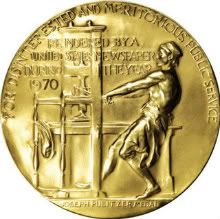
Both the Washington Post and Guardian UK won Pulitzer Prizes for releasing many of the secrets Edward Snowden stole from the United States Government. The award also went to Glenn Greenwald, Laura Poitras, Ewen McAskill and Barton Gellman for their Obama-slamming coverage as Snowden escaped his own country, first to Hong Kong and later Russia. Yeah, that's great. The Pulitzer Committee obviously overlooked the major flaws in the reporting, including contradictions, unfounded fear-mongering, and just pure lies (see previous posts listed above for examples). But that's okay - bad reporters win awards all the time. Have your happy day, but realize that while you may have "started a conversation" about U.S. Spy techniques it remains to be seen if the reporting was actually the "public service" you think it is. Hisory and future actions of spies like Snowden will judge this reporting much more harshly than critics on twitter. Good luck with that.


From Yahoo News
The Guardian and The Washington Post won a prestigious Pulitzer Prize on Monday for reporting on secret US surveillance programs revealed by former National Security Agency contractor Edward Snowden.
The shared award went to the two newspapers credited with breaking the news about NSA surveillance programs, without specifically citing the journalists involved.
The reporters who played key roles in the story included Glenn Greenwald, who has since left the Guardian, and colleague Ewen MacAskill. Barton Gellman, who already has two Pulitzers, was the writer of most of the Washington Post reports.
Laura Poitras, a documentary filmmaker who was the point of contact for Snowden, had the unusual distinction of sharing bylines in both the Guardian and the Post on the topic.

Disclosing the massive expansion of the NSA’s surveillance network absolutely was a public service. In constructing a surveillance system of breathtaking scope and intrusiveness, our government also sharply eroded individual privacy. All of this was done in secret, without public debate, and with clear weaknesses in oversight.”
. . . (Without Snowden) we never would have known how far this country had shifted away from the rights of the individual in favor of state power. There would have been no public debate about the proper balance between privacy and national security. As even the president has acknowledged, this is a conversation we need to have.
~ Martin Baron, Editor of Washington Post


We are truly honoured that our journalism has been recognised with the Pulitzer prize. This was a complex story, written, edited and produced by a team of wonderful journalists. We are particularly grateful for our colleagues across the world who supported the Guardian in circumstances which threatened to stifle our reporting. And we share this honour, not only with our colleagues at the Washington Post, but also with Edward Snowden, who risked so much in the cause of the public service which has today been acknowledged by the award of this prestigious prize.
~ Alan Rusbridger, the editor-in-chief of the Guardian

Today's decision is a vindication for everyone who believes that the public has a role in government. We owe it to the efforts of the brave reporters and their colleagues who kept working in the face of extraordinary intimidation, including the forced destruction of journalistic materials, the inappropriate use of terrorism laws, and so many other means of pressure to get them to stop what the world now recognises was work of vital public importance.
~ Edward Snowden, via Guardian UK


~~~~~~~~~~~~~~~~~~~~~

Edward Snowden didn’t win a Pulitzer on Monday, but he might as well have.
~ Dylan Byers on Politico

The Guardian and Washington Post Don't Deserve Pulitzers Just for Sparking a Debate
. . . if sparking a debate is enough to earn the Pulitzer’s coveted public service medal, then sure. Congrats. I would note, however, that merely sparking a debate is an exceedingly low standard.
There was a time, and it wasn’t very long ago, when this medal meant something more, when “aggressive reporting” meant more than being a vehicle to shovel leaked documents to the public, with stops along the way for obligatory government comment, for fawning characterizations of one’s own sources, and for tendentious claims about what those documents say.
~ Benjamin Wittes on New Republic

Pulitzers don’t make Snowden a hero
. . . It is not the media or the Pulitzer committee that should judge what Snowden did. The main judgment should come from the courts, which are now considering what the government was up to in its collection programs and should also consider what Snowden did. You may think Snowden a whistle-blower, but the only way of knowing whether he is or not is for him to return to the US and face a jury of his peers. He may continue to refuse to do that, and prefer to be sheltered by a government whose behavior he surely knows is at least as bad as that of the one he fled, but that doesn’t make him a hero. It makes him a fugitive.
~ Daniel Serwer on Peacefare.net


Saturday, August 10, 2013

President Obama: Snowden is not a Patriot

 photo snowdenPatriot2.jpg

President's Remarks at Press Conference 8-9-13
As I said at the National Defense University back in May, in meeting those threats we have to strike the right balance between protecting our security and preserving our freedoms. And as part of this rebalancing, I called for a review of our surveillance programs. Unfortunately, rather than an orderly and lawful process to debate these issues and come up with appropriate reforms, repeated leaks of classified information have initiated the debate in a very passionate, but not always fully informed way.
. . . these steps are designed to ensure that the American people can trust that our efforts are in line with our interests and our values. And to others around the world, I want to make clear once again that America is not interested in spying on ordinary people. Our intelligence is focused, above all, on finding the information that’s necessary to protect our people, and -- in many cases -- protect our allies.
. . . We shouldn’t forget the difference between the ability of our government to collect information online under strict guidelines and for narrow purposes, and the willingness of some other governments to throw their own citizens in prison for what they say online.
And let me close with one additional thought. The men and women of our intelligence community work every single day to keep us safe because they love this country and believe in our values. They're patriots. And I believe that those who have lawfully raised their voices on behalf of privacy and civil liberties are also patriots who love our country and want it to live up to our highest ideals. So this is how we’re going to resolve our differences in the United States -- through vigorous public debate, guided by our Constitution, with reverence for our history as a nation of laws, and with respect for the facts.

Julie Pace. Q Thank you, Mr. President. I wanted to ask about some of the foreign policy fallout from the disclosure of the NSA programs that you discussed. Your spokesman said yesterday that there’s no question that the U.S. relationship with Russia has gotten worse since Vladimir Putin took office. How much of that decline do you attribute directly to Mr. Putin, given that you seem to have had a good working relationship with his predecessor? Also will there be any additional punitive measures taken against Russia for granting asylum to Edward Snowden? Or is canceling the September summit really all you can do given the host of issues the U.S. needs Russian cooperation for? Thank you.

THE PRESIDENT: . . . President Putin -- who was prime minister when Medvedev was president -- came back into power I think we saw more rhetoric on the Russian side that was anti-American, that played into some of the old stereotypes about the Cold War contests between the United States and Russia. And I've encouraged Mr. Putin to think forward as opposed to backwards on those issues -- with mixed success.
. . . I know that one question that's been raised is how do we approach the Olympics. I want to just make very clear right now I do not think it's appropriate to boycott the Olympics. We've got a bunch of Americans out there who are training hard, who are doing everything they can to succeed. Nobody is more offended than me by some of the anti-gay and lesbian legislation that you've been seeing in Russia. But as I said just this week, I've spoken out against that not just with respect to Russia but a number of other countries where we continue to do work with them, but we have a strong disagreement on this issue.

And one of the things I'm really looking forward to is maybe some gay and lesbian athletes bringing home the gold or silver or bronze, which I think would go a long way in rejecting the kind of attitudes that we're seeing there. And if Russia doesn't have gay or lesbian athletes, then it probably makes their team weaker.

Q Are there going to be any additional punitive measures for Russia, beyond canceling the summit?

THE PRESIDENT: Keep in mind that our decision to not participate in the summit was not simply around Mr. Snowden. It had to do with the fact that, frankly, on a whole range of issues where we think we can make some progress, Russia has not moved. And so we don't consider that strictly punitive....
~~~~~~~~~~~~

Chuck Todd. Q Thank you, Mr. President. Given that you just announced a whole bunch of reforms based on essentially the leaks that Edward Snowden made on all of these surveillance programs, is that change -- is your mindset changed about him? Is he now more a whistle-blower than he is a hacker, as you called him at one point, or somebody that shouldn’t be filed charges? And should he be provided more protection? Is he a patriot? You just used those words. And then just to follow up on the personal -- I want to follow up on a personal --

THE PRESIDENT: Okay, I want to make sure -- everybody is asking one question it would be helpful.

Q No, I understand. It was a part of a question that you didn’t answer. Can you get stuff done with Russia, big stuff done, without having a good personal relationship with Putin?

THE PRESIDENT: I don’t have a bad personal relationship with Putin. When we have conversations, they’re candid, they’re blunt; oftentimes, they’re constructive. I know the press likes to focus on body language and he’s got that kind of slouch, looking like the bored kid in the back of the classroom. But the truth is, is that when we’re in conversations together, oftentimes it’s very productive.

So the issue here really has to do with where do they want to take Russia -- it’s substantive on a policy front. And --

Q (Inaudible.)

THE PRESIDENT: No. Right now, this is just a matter of where Mr. Putin and the Russian people want to go. I think if they are looking forward into the 21st century and how they can advance their economy, and make sure that some of our joint concerns around counterterrorism are managed effectively, then I think we can work together. If issues are framed as if the U.S. is for it then Russia should be against it, or we’re going to be finding ways where we can poke each other at every opportunity, then probably we don’t get as much stuff done.

See, now I’ve forgotten your first question, which presumably was the more important one. No, I don’t think Mr. Snowden was a patriot. As I said in my opening remarks, I called for a thorough review of our surveillance operations before Mr. Snowden made these leaks.

My preference -- and I think the American people’s preference -- would have been for a lawful, orderly examination of these laws, a thoughtful fact-based debate that would then lead us to a better place. Because I never made claims that all the surveillance technologies that have developed since the time some of these laws had been put in place somehow didn't require potentially some additional reforms. That's exactly what I called for.

So the fact is, is that Mr. Snowden has been charged with three felonies. If, in fact, he believes that what he did was right, then, like every American citizen, he can come here, appear before the court with a lawyer and make his case. If the concern was that somehow this was the only way to get this information out to the public, I signed an executive order well before Mr. Snowden leaked this information that provided whistleblower protection to the intelligence community -- for the first time. So there were other avenues available for somebody whose conscience was stirred and thought that they needed to question government actions.


~~~~~~~~~~~~~~~~~~~~~


Edward Snowden, Patriot
President Obama’s news conference today was … weird.
. . . the White House could have led that thoughtful, fact-based debate, and despite Obama’s protestations to the contrary, they didn’t. They prevented it. If this conversation, and these reforms, are as positive for the country as Obama says they are, then it’s hard to escape the conclusion that Snowden did the country a real service — even if the White House can’t abide crediting him with it.
~ Ezra Klein in Washington Post


Today the President of the United States validated Edward Snowden’s role as a whistleblower by announcing plans to reform America’s global surveillance program. But rather than thank Edward Snowden, the President laughably attempted to criticize him while claiming that there was a plan all along, “before Edward Snowden.” The simple fact is that without Snowden’s disclosures, no one would know about the programs and no reforms could take place. As Thomas Jefferson so eloquently once stated, “All tyranny needs to gain a foothold is for people of good conscience to remain silent.” Luckily for the citizens of the world, Edward Snowden is one of those “people of good conscience” who did not “remain silent”, just as Pfc Bradley Manning and Daniel Ellsberg refused to remain silent.
. . . Today was a victory of sorts for Edward Snowden and his many supporters. As Snowden has stated, his biggest concern was if he blew the whistle and change did not occur. Well reforms are taking shape, and for that, the President and people of the United States and around the world owe Edward Snowden a debt of gratitude.
~ Wikileaks Founder Julian Assange

I think some people on the far left are giving Snowden way too much credit. It is not as if he “exposed” anything that we all didn’t know was already going. In most ways, the Snowden/Greenwald circus has hurt the discussion by taking attention away from the issue. I don’t believe that there is anything patriotic about what Snowden did. A true patriot doesn’t abandon the cause and run to Russia to save his own skin. Patriots don’t put themselves first. Obama pointed out that what Snowden revealed was the prospect that these programs could be abused, not actual abuse of the programs.
I think more transparency is a wonderful idea, but do you what’s even better than transparency? Getting rid of the Patriot Act.
~ Jason Easley, PoliticusUSA


Friday, August 2, 2013

Snowden Finally Leaves Russian Airport

 photo snowdenCartoon4.jpg


Previous Posts:
Crime or Punishment? Snowden Remains Stuck at Moscow Airport
Opinions Range from Naive Joy to Good Riddance as Snowden Plans to Leave Moscow Airport

~~~~~~~~~~~~~~~~~~~~

From Wired
NSA whistleblower Edward Snowden has been granted temporary asylum in Russia for one year and has finally left Moscow’s Sheremetyevo airport.

It’s unclear whether Snowden, 30, plans to settle in Russia for the long term, or pursue safe passage onward to one of four Latin America countries that have offered him permanent asylum: Bolivia, Ecuador, Nicaragua and Venezuela.

His local Russian lawyer told the Guardian that Snowden left in a taxicab.

WikiLeaks said in its Twitter feed that Snowden remains in the company of WikiLeaks activist Sarah Harrison. WikiLeaks has been helping Snowden since he escaped Hong Kong last month one step ahead of U.S. requests for his arrest.


Update: The US is now on record with a response to Snowden's newfound asylum, with White House spokesman Jay Carney saying the Obama administration is "extremely disappointed" with Russia's decision. The offering of asylum stands to damage an already rocky relationship between the two countries; Carney hinted that the US may call off a summit with Russia that's currently scheduled for September. "We are evaluating the utility of a summit in light of this," he said.
~ From The Verge

There are so many things the U.S. and Russia could be working on together now, and Russia really doesn't have a lot going for it these days. I mean, they have oil production and all that, but there's not much of a way they can leverage the United States. But it's almost as if Putin has now sort of adopted a Hugo Chavez sort of mentality: 'We'll just keep poking our finger in the eye of the giant to show everybody we're big and tough.'
. . . It's just like tormenting, the little guy tormenting the big guy to see if he'll do something. . . . Almost like a high school kind of thing.
~ Bob Schieffer on CBS News


Snowden received immigration papers on Thursday from his lawyer, Anatoly Kucherena, and immediately jumped into a taxi with a pre-packed suitcase and headed into Moscow.
"Snowden is in a safe place. I didn't suggest it to him, it was his decision," Kucherena told Dozhd TV, RIA Novosti reports. "He will decide for himself how to live his life from now on. He has friends with him, including Americans with whom he made contact via his friends from the United States when he was still in the [airport] transit zone."
~ USA Today

It is unclear who those "American friends" are, and how Snowden, who has not had visitors for 39 days, and has never been to Moscow, made them. What we do know is that Moscow is still crawling with American spooks—as we learned from the CIA agent nabbed in Moscow while wearing an obscene blond wig—so maybe those are his American friends in Moscow. Likely, though, Snowden will live in an apartment that is bugged to the hilt, as any of my American (and British) friends in Moscow can tell you. They'd also likely tell you about how the Russian security services will regularly pay visits to your apartment, usually when you're not there, and leave overt "we were here" clues behind: missing rugs, opened emails, a ladder in the bedroom, a gun on your welcome mat. It may not be as excruciating as intercom announcements from a world now closed to you, but it's a close second, believe me.
~ Julia Ioffe on New Republic

Angry people, confused by not enough education and too much information, or unwilling to face their own poor choices in life, or bearing vague grudges about the forces that always seem to deprive them of the right job, or mate, or status among their peers, cheer on a Snowden or a Manning as a kind of self-actualizing exercise.
They’re happy that someone’s finally sticking it to the Man, or the system, or the Coca-Cola Corporation, or whomever they resent for not giving them a round of applause every morning just for getting dressed without help.
. . . Think about it: when people say that Snowden and Manning had the right to do what they did, they’re saying that a 23 year old Army private knows what the hell he’s doing with 700,000 classified documents. No experience needed: his youth and good sense are justification enough.
. . . Snowden and Manning’s supporters constantly wail that they had “nothing to gain” by doing what they did. But that’s exactly wrong: they had everything to gain, because anything would have been better than the stalled-0ut lives they were living — and by this, I mean the lives they think they were supposed to be living. The drudgery of the Army, the slog of government contracting, even a job in Hawaii with a pole-dancing girlfriend with lit cupcakes on her boobs: none of it was enough for hollow young men who craved the frisson of heroism on the cheap.
~ Tom Nichols on The War Room Blog


~~~~~~~~~~~~~~~~~~~~~


Tuesday, June 11, 2013

Edward Snowden: Hero or Villain?

 photo Snowden3.jpg

Previous Post:
Snark Amendment: Edward Snowden Releases NSA Secrets

~~~~~~~~~~~~


We should be thankful for individuals like Edward Snowden and Glenn Greenwald who see injustice being carried out by their own government and speak out, despite the risk. They have done a great service to the American people by exposing the truth about what our government is doing in secret.
~ Snowden's choice for President, Ex-Candidate Ron Paul, via Washington Post

Edward Snowden is no Hero
. . . Snowden is now at the mercy of the Chinese leaders who run Hong Kong. As a result, all of Snowden’s secrets may wind up in the hands of the Chinese government—which has no commitment at all to free speech or the right to political dissent. And that makes Snowden a hero?
~ Jeffrey Toobin on The New Yorker


(Snowden) has damaged national security, our ability to track down terrorists, or those with nefarious intent, and his disclosure has not made America safer.
~ Congressman Jim Langevin, D-Rhode Island, in New York Times

I don't look at this as being a whistleblower. I think it's an act of treason.
. . . He violated the oath, he violated the law. It's treason.
~ Senator Dianne Feinstein on The Hill

Edward Snowden is a hero
. . . Snowden is a hero because he realized that our very humanity was being compromised by the blind implementation of machines in the name of making us safe. Unlike those around him, who were too absorbed in their task to reflect on their actions and pause in their pursuit of digital omniscience, Snowden allowed himself to be "disturbed" by what he was doing.
More in the midst of technology than most of us will ever be, Snowden disengaged for long enough to be human and to consider the impact of what he was helping build. He pressed pause.
~ Douglas Rushkoff on CNN

He betrayed honesty and integrity, the foundation of all cooperative activity. He made explicit and implicit oaths to respect the secrecy of the information with which he was entrusted. He betrayed his oaths.
. . . He betrayed his employers. Booz Allen and the C.I.A. took a high-school dropout and offered him positions with lavish salaries. He is violating the honor codes of all those who enabled him to rise.
He betrayed the cause of open government. Every time there is a leak like this, the powers that be close the circle of trust a little tighter. They limit debate a little more.
He betrayed the privacy of us all. If federal security agencies can’t do vast data sweeps, they will inevitably revert to the older, more intrusive eavesdropping methods.
He betrayed the Constitution. The founders did not create the United States so that some solitary 29-year-old could make unilateral decisions about what should be exposed. Snowden self-indulgently short-circuited the democratic structures of accountability, putting his own preferences above everything else.
~ David Brooks on New York Times